

Are you planning to enter the Polish market, launch a PR campaign or advertise in Poland? Choosing the right media can make or break your PR efforts. The Polish media landscape is broad, but not every outlet carries the same influence. Where should you focus your PR efforts to make your brand visible? Let’s take a look at the media outlets worth prioritising.
The state of the Polish media advertising market
The Polish media market isn’t standing still. Advertising and public relations budgets are still growing – but where that money goes looks different than it did just a few years ago.
Digital is the big leader. Online advertising grew by 15% in 2025, reaching almost PLN 11 billion. It already accounts for more than 60% of all advertising spending in Poland and was responsible for around 90% of the market’s growth last year.
Brands here are putting more money into online video, social media, connected TV and retail media. Mobile matters more than ever too. It already makes up 36% of online advertising spending, 92.8% of Poles use the internet on their phones. Almost 70% of the time they spend online happens in mobile apps.
The market is changing in other ways as well. 88% of marketers use AI at work, and publishers are no longer relying on Google as much as they used to. Instead, they’re building paid subscriptions, newsletters, events and other ways to reach readers directly.
But here’s the interesting part. Most Poles now get their news online. According to the Reuters Institute, that’s 77% of the population. Yet many of the stories that dominate public debate still come from traditional newspapers.
Choosing the right media isn’t as simple as looking at audience numbers. The biggest outlet isn’t always the one with the biggest influence and PR potential.
The most important Polish online publishers for advertising
If you ask a Polish media relations professional where to start building a media list, they’ll almost certainly point you to Poland’s biggest online publishers. They’re usually the best choice for:
- product launches
- investment announcements
- research and reports
- expert commentary
- company news with nationwide relevance
- crisis communication
A strong story published by a major news portal rarely stops there. Other publishers often pick it up, television and radio journalists may refer to it, and it can quickly spread across social media.
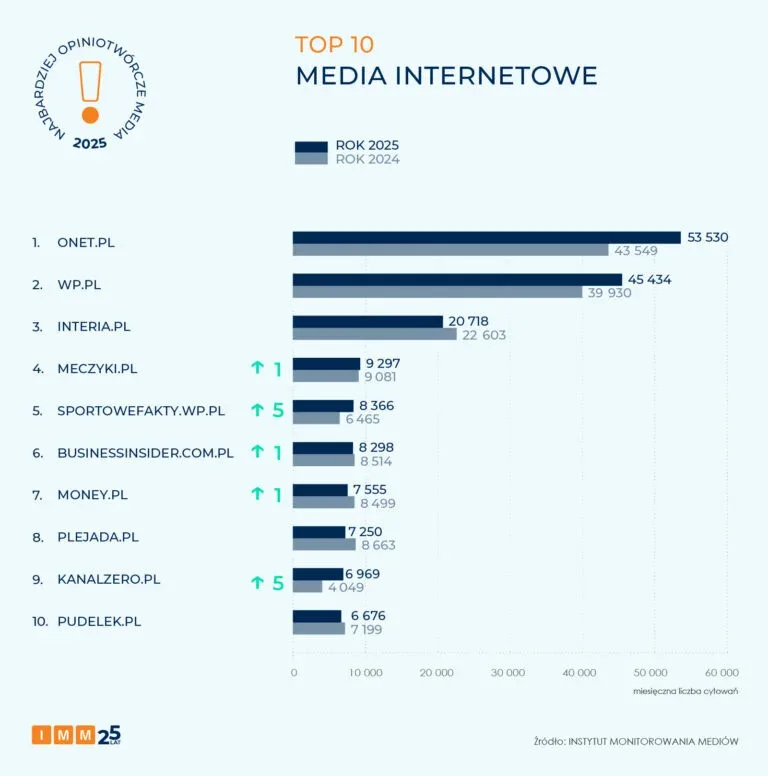
According to Mediapanel, Poland had 29.2 million internet users in June 2026. Interia reached 14.3 million real users, followed by Onet with 13.9 million and Wirtualna Polska with 13.6 million. These are Poland’s three biggest online publishers and should be at the top of almost every nationwide media list.
Other publishers also play an important role. TVN24.pl is one of the country’s leading sources of breaking news, RMF24 brings the strength of RMF FM into online news, while Gazeta.pl remains an important destination for news, opinion and lifestyle content.
Paid opportunities on online publishers
In addition to editorial coverage, most major publishers also offer commercial formats:
- Display advertising – banners and pop-up ads that capture immediate attention.
- Sponsored content – articles or videos that blend into the portal’s editorial style.
- Native articles – promotional pieces that match the website and drive engagement without feeling intrusive.
- Video – websites like TVN24.pl and Polsatnews.pl offer pre-roll and mid-roll advertising slots in their multimedia content.
The Polish TV advertising market
Most stories in Poland break online these days. But television still changes how people see them. When a story makes it onto TV, it feels bigger. It reaches people who would never read a business website, and it often gets picked up by other media as well.
You’ll usually get the best results from television if your story is bigger than your company. It is usually the right choice for:
- major investments and expansion plans
- market reports and original research,
- executive interviews and expert commentary,
- crisis communication,
- stories with a wider social or economic impact.
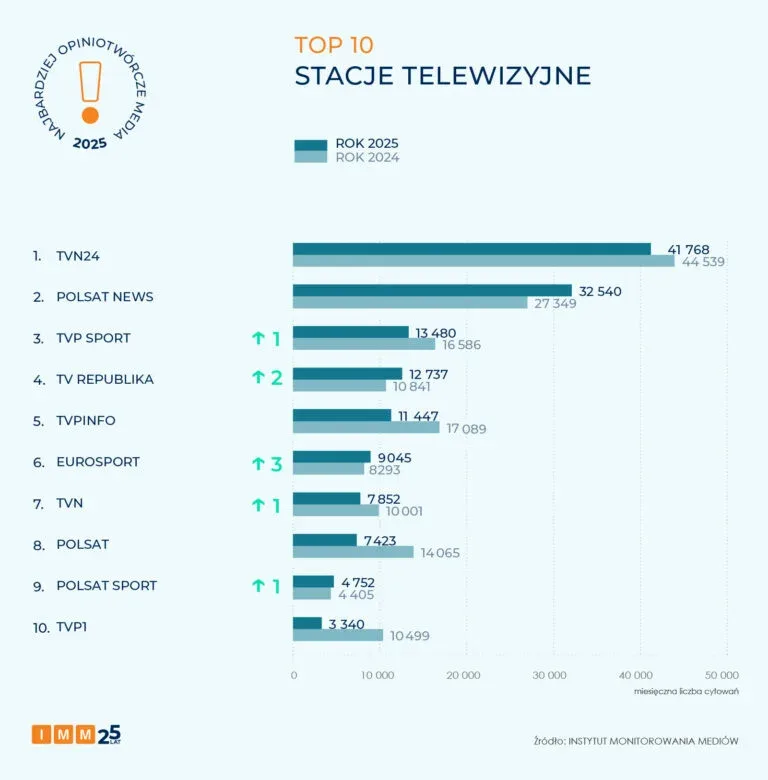
The numbers reflect that. According to the Reuters Institute, 52% of people in Poland still get news from television every week. TVN24 also remained the country’s most influential TV news brand in 2025, with more than 41,800 citations by other media. Polsat News came second with around 32,500.
One thing we’ve learned from working with global companies is that Polish television is much less forgiving than other media. You don’t get a page of quotes or a carefully crafted statement. You might get twenty seconds. If your spokesperson can’t explain the story simply, the opportunity disappears.
Paid opportunities on Polish television
If you have the budget, you can also work directly with broadcasters through:
- TV commercials
- programme sponsorship
- product placement
- branded content
The most expensive slots are usually between 6 pm and 10 pm, especially around the evening news and popular entertainment programmes.
According to a gemiusAdReal study from November 2024, the pharmaceutical industry was the most active sector in advertising, reaching 91.51% of Poland’s population aged 7 to 75 in just one month. The retail sector came in second (with 91.49% reach), followed by the food industry at 91.44% reach.
Commercial breaks during flagship shows, news programs, or entertainment formats are competitive and come with premium rates. A 30-second ad spot during these hours can cost tens or even hundreds of thousands of złoty, depending on the program’s popularity and the season (Christmas campaigns can even double these rates).
The Polish press advertising market
Print media in Poland are getting smaller. Sales of national daily newspapers fell by 11.1% in 2025, followed by another 13% year-on-year decline in the first quarter of 2026. Opinion weeklies have also mostly seen lower sales, although some have managed to grow their digital editions.
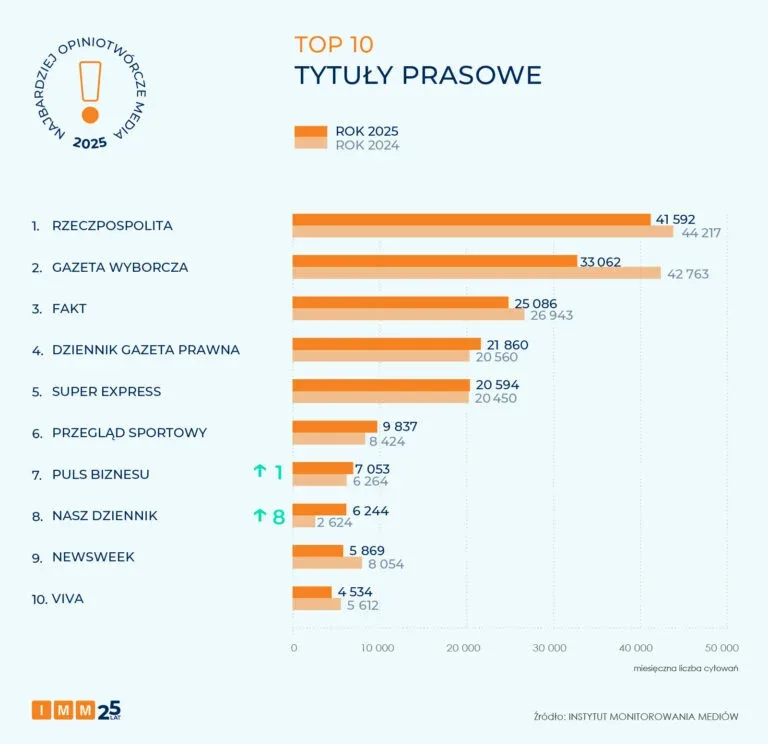
But smaller circulation does not mean newspapers have lost their influence. Titles such as Rzeczpospolita, Gazeta Wyborcza and Dziennik Gazeta Prawna are still among the most trusted and frequently cited newspapers in Poland. Fakt and Super Express remain important too, especially when a story needs broad consumer reach.
Newsweek, Viva, Wprost, Polityka, Forbes and Press can still be relevant for brands that want to reach readers interested in business, lifestyle, fashion or professional topics.
Print is about being in the right place and next to the right content. A mention or campaign in a respected title can still help build credibility, especially in areas such as finance, B2B or premium products.
Paid opportunities in print media
- Full-page ads – high-impact visuals and clear messaging
- Sponsored articles – branded content integrated into editorial themes
- Classified ads – good for local services, real estate or job postings
- Cover wraps – premium positioning that guarantees maximum visibility
The Polish radio advertising market
Radio doesn’t get talked about as much as online media or television, but it still deserves a place in most brand PR campaigns.
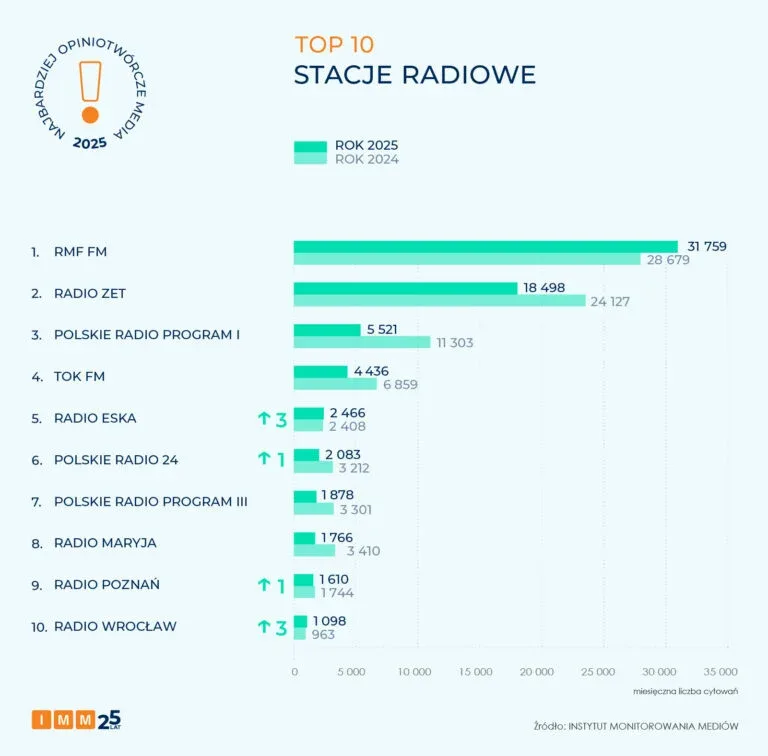
RMF FM remains Poland’s biggest radio station, with a 28.2% share of listening time between April and June 2026. Radio ZET ranked second with 14.2%, followed by Polish Radio One (4.9%) and TOK FM (2.1%). RMF FM was also the country’s most frequently cited radio station in 2025.
If you’re building a national media list, RMF FM and Radio ZET are hard to ignore. They reach large audiences and regularly drive the news agenda, making them a good fit for consumer campaigns, major company announcements and crisis communication.
Paid opportunities on Polish radio
Most national radio stations offer:
- radio advertising
- programme sponsorship
- branded content
- competition sponsorship
Radio in Poland has its version of prime time, with the morning commute (6 AM–9 AM) and afternoon drive time (3 PM–6 PM). These hours are the most popular for ads and come with higher costs, but they guarantee a large and engaged audience.
Business and industry media market in Poland
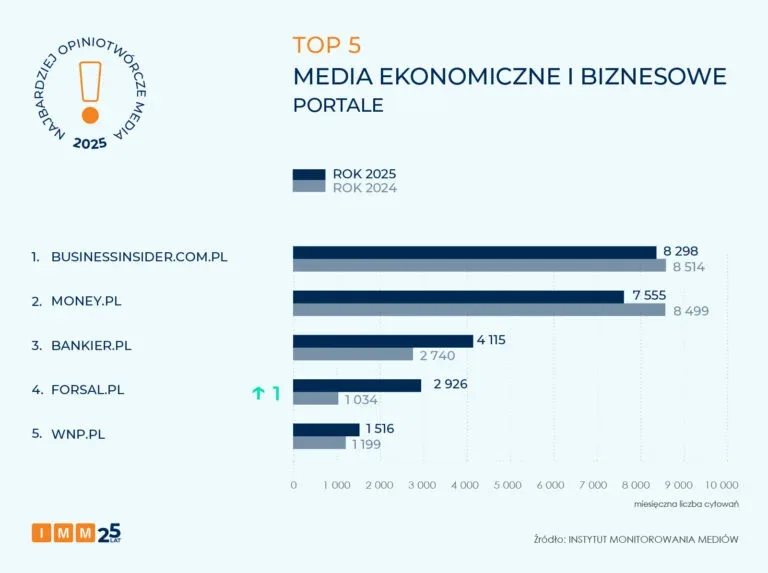
Business media should be near the top of your media list if you’re announcing an investment, acquisition, market research, financial results or a major leadership change.
Rzeczpospolita remains the country’s most influential business publication, generating 41,600 media citations in 2025. Dziennik Gazeta Prawna ranked second with 21,100. Puls Biznesu, Business Insider Polska, Money.pl and Bankier.pl are also among the key titles for business communication.
For many companies, though, industry media can be just as important.
If you’re launching a manufacturing facility, announcing a healthcare partnership or entering the energy market, specialist publications reach the people who are most likely to care about it. WNP.pl, for example, attracts more than 4 million users, Portal Samorządowy almost 5 million and Rynek Zdrowia around 4.5 million.
A fintech launch, a new logistics centre and an employer branding campaign rarely belong on the same media list. We tailor every media list to the campaign, the industry and the audience, identifying the journalists and publications that are most relevant to your story.
Paid opportunities
Many business and specialist publishers also offer:
- sponsored and guest articles
- native advertising
- display advertising
- conference sponsorship
- webinars and industry events
Key things to know about the Polish media market in 2026
Online publishers are doing more than republishing news
A few years ago, online portals were often seen mainly as places where stories from newspapers or TV ended up. Today, the biggest Polish publishers have their own journalists, investigations and expert content. Many important stories start online and only later move to television, radio or print.
This is worth remembering if you’re entering the Polish market. The old rule of “newspapers create prestige, online media spread the message” doesn’t really apply anymore.
A media logo is no longer enough
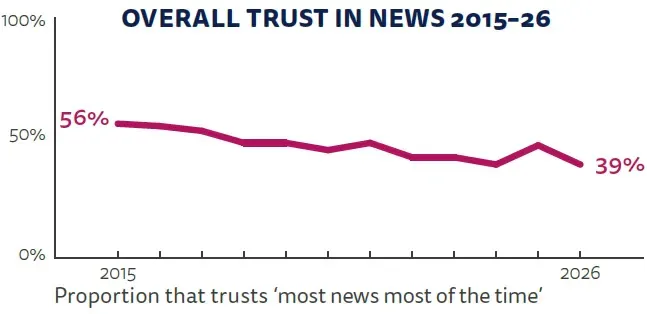
Trust in news has become a real challenge in Poland. In 2026, 39% of Poles said they generally trusted news. It’s eight percentage points less than a year earlier. 46% said they sometimes or often avoid news, and only 11% pay for online news.
What does this mean for brands? Getting coverage in a recognised publication doesn’t automatically make people believe the message. Good PR stories need proof – reliable data, credible experts and information that Poles can check.
New media brands are built around people
The Polish media market is becoming more personal. Many Poles now follow specific journalists, commentators and creators, not media brands. Kanał Zero is probably the best example of it.
What started as a YouTube channel has quickly grown into a wider media brand. It generated nearly 7,000 media citations in 2025, launched Zero.pl in 2026 and later expanded into television.
Regional media remain highly influential
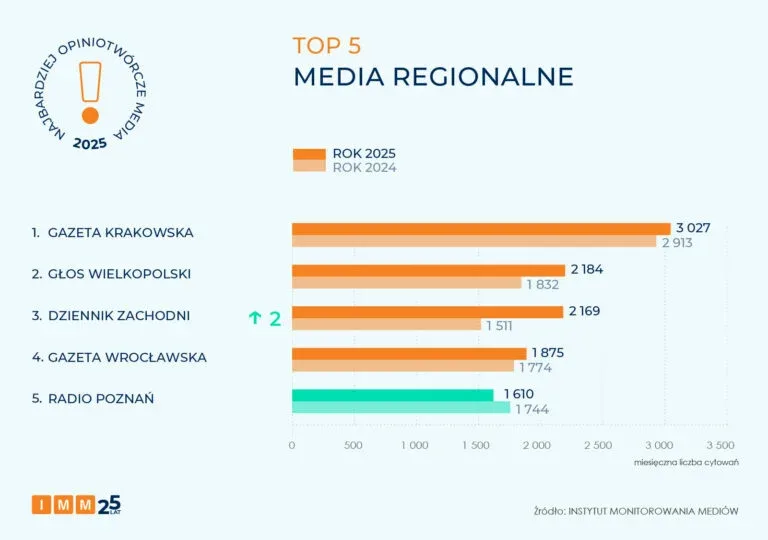
When a brand opens a new location in Poland, hires locally or deals with a community issue, national media are not always the best place to start. Regional journalists who know the local context much better are more relevant for stories connected to a specific city or region.
In 2025, IMM recorded thousands of citations for titles such as Gazeta Krakowska, Głos Wielkopolski and Dziennik Zachodni, often around employment, safety and local issues. The key thing is that there is no single “regional media list” for Poland. The right contacts depend on where you operate and what story you want to tell.
Frequently Asked Questions about Polish media market
Should I send the same content to every Polish media outlet?
Usually not. Different media look for different stories. A business newspaper, a regional radio station and a consumer news website all have different audiences and priorities. A targeted pitch to the right journalists is usually far more effective than sending the same press release or the same ad to everyone.
Should I contact journalists directly to a general newsroom email?
Whenever possible, contact the journalist who covers your industry. Large Polish publishers have specialist reporters, and a personalised pitch is much more likely to get noticed than a message sent to a general newsroom inbox. If you don’t already have the right media contacts, our team can help identify the most relevant journalists and introduce your story to the right people.
Do Polish journalists accept exclusive stories?
Yes, especially when the story is genuinely newsworthy. Major investments, original research or significant business announcements can often benefit from an exclusive interview or early access before the wider launch.
Can one media list work for every PR or advertising campaign in Poland?
No. The right media list depends on your audience and your objective. A consumer campaign, an investment announcement and an employer branding campaign all require different media and different journalists. At All 4 Comms, we build tailored media lists for every campaign and maintain relationships with journalists across national, regional and specialist media.
Is it better to advertise on national or regional media in Poland?
It depends on the story. National media are usually the right choice for announcements with broad relevance, while regional media are often more important for local investments, recruitment or community news. Many campaigns benefit from combining both.
Every PR campaign in Poland starts with the right communication strategy. If you’re entering the Polish market or planning your next campaign, get in touch with our team.