
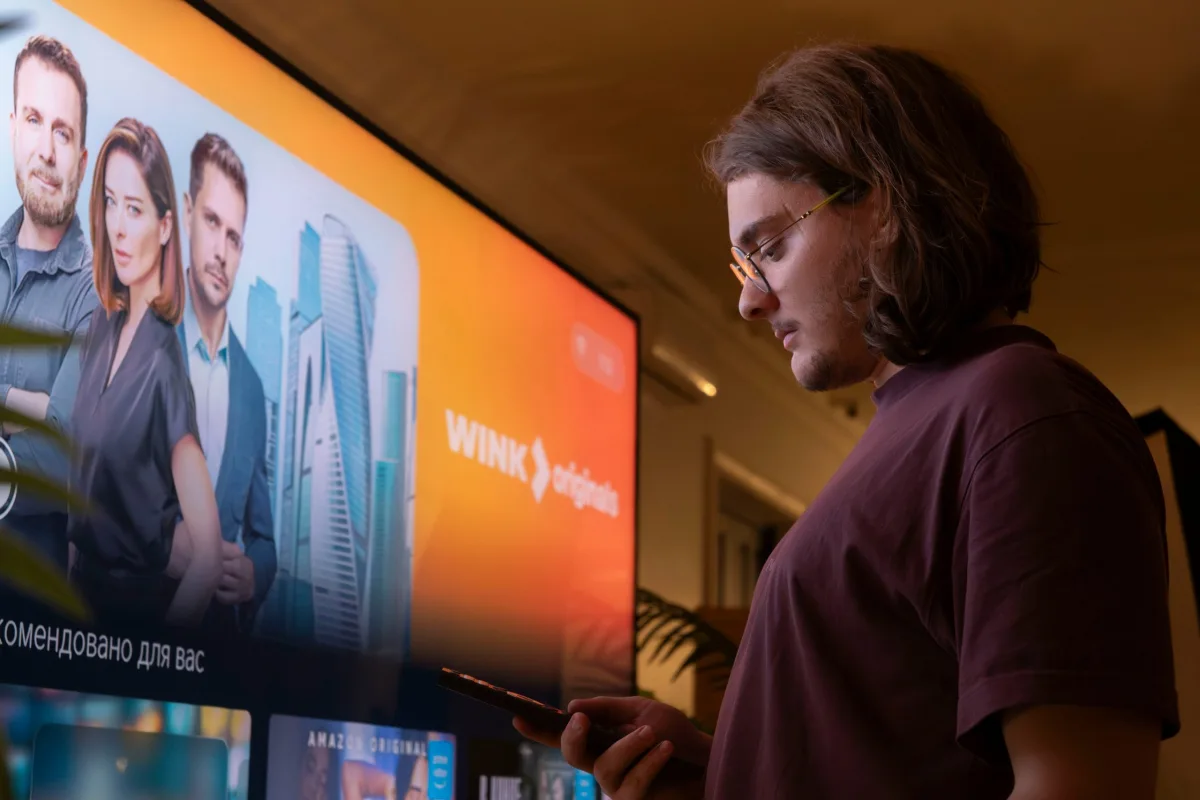
Some streaming platforms in Poland have huge content libraries and recognisable titles… but still feel almost invisible. Others are sitting on trends exploding across Polish internet culture, but barely anyone positions them that way. Here are 9 VOD brands that could gain a lot from more localised PR in Poland.
1. Apple TV
Yes. Apple TV. Hear us out. Despite being backed by one of the world’s biggest tech companies, Apple TV still feels surprisingly under-the-radar in Poland. That is interesting, especially since it now has some of the most acclaimed streaming TV shows, such as Severance, Ted Lasso, Silo or Slow Horses.
And yet, in Poland, Apple TV still feels more like “that place where Severance is” rather than a fully established entertainment brand. Its content is recognised. The platform itself is not.
The Polish audience also still does not realise that Apple’s ecosystem has movie rentals and digital film purchases, including titles shortly after cinema release. That part of this streaming platform remains invisible from local entertainment conversations.
For us, that creates a very interesting PR and localisation opportunity. Poles are highly responsive to prestige TV, strong online fandoms and aesthetically driven series culture.
2. ARTE.tv
ARTE.tv feels surprisingly overlooked in Poland, especially because many of the trends already work in its favour. According to a 2025 study by Millennium Docs Against Gravity, 51% of Polish TikTok users say they watch more documentaries than before. Documentaries, true crime, politics, culture, and socially driven storytelling are all becoming more visible online.
ARTE.tv sits exactly at the intersection of those trends. We see big brand PR potential not in “selling streaming”, but in building cultural visibility around the media. Especially since Polish audiences respond very well to identity-driven brands.
We could easily imagine collaborations with Polish documentary festivals, partnerships with creators focused on cinema, history or politics, and PR campaigns positioning ARTE.tv as a smarter alternative to mainstream VOD platforms in Poland.
3. Crunchyroll
At this point, anime is part of mainstream internet culture in Poland. It has become part of mainstream internet culture. According to Ampere Analysis, between 22% and 36% of European viewers actively watch anime. Anime is also becoming huge on mainstream streaming platforms in Poland. Netflix viewing data regularly places anime titles among its most-watched content.
The Polish audience already goes far beyond the hardcore fandom itself. There is a growing group of casual viewers who watch anime on Netflix, see clips on TikTok, know the aesthetics and recognise the biggest titles… without necessarily knowing that a dedicated platform like Crunchyroll even exists.
For us, the biggest PR potential here is not about introducing anime to Poland. That already happened. The real challenge is making Crunchyroll feel culturally visible outside the fandom bubble.
This could work through collaborations with events like Pyrkon, partnerships with anime, gaming and cosplay creators, or media relations in lifestyle or entertainment media outlets.
4. FlixClassic
We think FlixClassic is sitting on a trend that most streaming brands underestimate in Poland: younger audiences getting obsessed with classic cinema. Old movies are suddenly everywhere online. TikTok edits, Letterboxd rankings, retro aesthetics, old horror films, 70s cinema, VHS vibes… it all became part of Polish internet culture.
We see a lot of Polish viewers complain that classic films are hard to find legally on online streaming platforms in Poland. Most large VOD libraries focus on new releases. People genuinely want to watch older films… but often end up searching them through random uploads.
That is why FlixClassic feels interesting. It already has everything. It needs just a solid, localised PR strategy, including collaborations with film creators, nostalgia-driven content, or campaigns built around “movies everyone should see at least once”.
5. Lingopie
According to Babbel, 48% of Poles watch films and series in their original language versions. Many of them are also trying to learn languages by watching Netflix or YouTube. Lingopie turns that existing behaviour into a dedicated entertainment product.
We think the “guilt-free binge-watching” angle has huge potential here. Polish audiences spend hours watching streaming platforms, but many still feel like they are wasting time. Lingopie flips that dynamic by making entertainment feel productive.
Also, 78% of Polish parents believe schools do not prepare children for communication in foreign languages. Many families are looking for more natural and engaging ways to expose children to languages outside school.
We could imagine influencer campaigns around learning through pop culture, partnerships with parenting and education media, or PR campaigns positioning Lingopie as the platform for people who want their movie obsession to feel productive.
6. MUBI
MUBI feels less like a streaming platform and more like an internet subculture. This is exactly why we think it has so much potential in Poland. Film culture has exploded in recent years.
Curated watchlists, “films everyone online suddenly talks about”, old cinema aesthetics and discovery-driven viewing are all becoming bigger parts of internet culture. Poland already has a strong cinema and festival audience. What still feels surprisingly underdeveloped is the cultural visibility around platforms like MUBI.MUBI could naturally grow through partnerships with local Polish cinemas and film festivals, collaborations with film creators and online movie communities, or PR campaigns built around film discovery and internet-driven viewing culture.
7. Rakuten TV
Rakuten TV might be one of the strangest VOD cases in Poland. A lot of people have probably seen it on their Smart TV… but very few actually think about it as a recognisable entertainment brand. Many viewers do not really know what it actually is: streaming platform, movie rental service, free TV, or all the above?
From a PR perspective, that is exactly where the opportunity starts. Especially now, when Polish audiences are getting tired of juggling multiple subscriptions and endlessly scrolling VOD platforms. Globally, we are already seeing the rise of “free streaming”, passive viewing and comfort-content consumption. Rakuten TV fits naturally into those behaviours.
It just needs a well-structured PR narrative built around subscription fatigue and having everything in one place. There is huge potential in exploring what Poles watch and get hooked on. Polish media loves stories backed by viewing data and audience insights. Especially when they reveal something surprising.
8. SkyShotwime
The catalogue of SkyShowtime is full of titles that have recognition in Poland. Yellowstone, Dexter, and Taylor Sheridan’s entire universe – Polish viewers know and watch this content. And yet, the platform itself still feels strangely underdefined compared to other mainstream VODs.
The biggest potential here feels less about visibility and more about identity. Many Poles still see SkyShowtime as “the place that has Yellowstone”. But the catalogue contains enough recognisable franchises and nostalgia-driven content to build entertainment identity around the brand itself.
What could work are stories around entertainment trends, such as time spent watching, abandoning shows after one episode, or even social topics, like how many couples argue over what to watch. There is also room to make more noise around shows that are huge abroad but a niche in Poland.
9. Viaplay
Ask someone in Poland about Viaplay and there is a good chance they will mention football, Formula 1 or Premier League before anything else. And yet, Viaplay also has one of the strongest Nordic noir and Scandinavian crime libraries on the streaming market. In many ways, Poland feels like a perfect audience for that kind of storytelling.
Crime and true crime are huge here. Not just on streaming platforms, but also on YouTube, podcasts and book markets. Scandinavian storytelling fits naturally into Polish viewing habits: slower pacing, psychological tension, and dark aesthetics.
For us, the biggest opportunity would be expanding the platform’s cultural perception beyond sports. We could easily imagine PR campaigns around Nordic noir culture, collaborations with true crime creators and podcasts, or winter-season media relation campaigns.
Global streaming platforms entering Poland often focus on content first. Meanwhile, local audiences respond just as strongly to cultural positioning, internet visibility and the way a platform fits into online conversations. If you want to build media visibility in Poland, let’s talk.