

The lead is one of the most important parts of every press release. Polish journalists decide within a few seconds whether the topic is worth reading further. A good lead immediately explains what happened, why it matters now, and why the Polish audience should care. In practice, the best-performing leads are short and built around one editorial angle. How to write one?
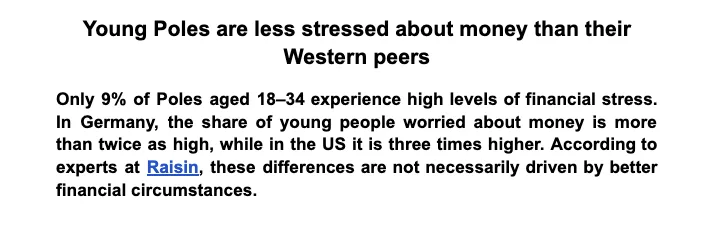
Start with a number
Over the years, our agency has created thousands of pieces of corporate content for clients across a wide range of industries.
One of the most effective ways to build a press release lead is to begin with a number.
Statistics immediately make the story feel more specific, credible and easier to understand. They help journalists quickly assess whether the topic has enough editorial value.
For example, a sentence like:
72% of Poles say they trust digital banking tools more than traditional financial advice.
usually works much better than:
A new study reveals changing financial behaviours among Polish consumers.
Do you see the difference?
The first sentence immediately gives scale, context and a potential headline angle.
This is especially important in Polish business, finance and technology media, where journalists prefer insights over vague messaging.
Mention the brand naturally
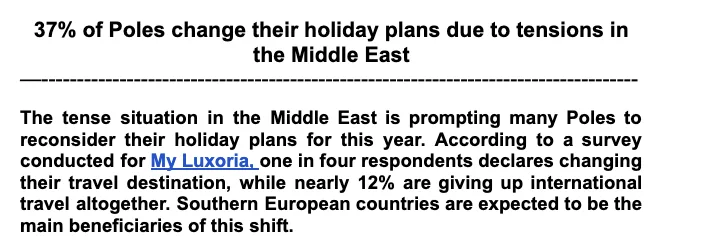
If your press release is based on a study, report or market analysis, the brand name should naturally appear early in the lead.
However, there is an important balance to maintain.
In Poland, excessive brand exposure can make a text feel too promotional.
We try to keep the brand presence subtle and natural. The brand should be visible but it should not dominate the lead.
It’s better to focus on:
- trends,
- behaviours,
- market shifts,
- surprising findings.
Add local Polish context
One of the most common mistakes global brands make is sending press releases that could apply to almost any country.
Polish journalists expect local relevance.
A press release lead becomes stronger when it includes:
- references to the Polish market,
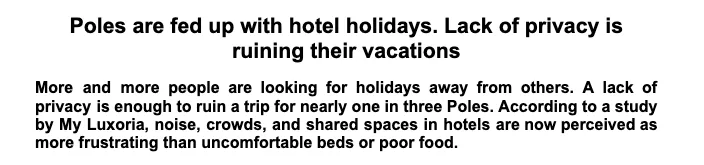
- comparisons between Poland and other countries,
- differences between Polish consumers and other nations,
- insights connected to local trends and behaviours.
For example:
- How Polish consumers do something different from Germans.
- Why Poland is adopting a trend faster than Western Europe.
- Why global behaviour looks different in Poland.
Comparisons naturally create better editorial angles and make the story easier to position in Polish media.
How long should a press release lead be in Poland?
In most cases, the perfect lead in Poland should not be longer than 3-4 sentences.
We see that long introductions filled with corporate information weaken the story.
The most effective leads are concise, fast to scan, and built around one central message.
Also, don’t forget about the sentence rhythm.
Many of our press releases in Polish mix shorter sentences with slightly longer explanatory ones. This creates a more natural reading flow and helps maintain attention.
Should you use bullet points in a press release lead in Poland?
Sometimes bullet points can actually perform better than classic lead paragraphs.
This is especially true for press releases about:
- funding rounds,
- market entries,
- acquisitions,
- partnerships,
- major investments,
- company milestones.
If the story contains several important figures or announcements, bullet points help to quickly understand the scale and significance of the news.
For example:
- €40 million investment in Poland,
- 300 new jobs planned,
- expansion into 5 new cities,
- launch scheduled for Q3 2026.
This format can be useful when the topic itself is highly corporate and may not immediately attract media attention on its own.
But please, be careful with press releases like that. It’s difficult to secure organic media coverage for them.
Polish media respond well to tension, surprise and non-obvious insights
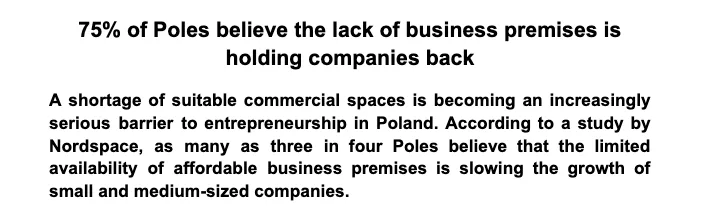
One of the best ways to improve a press release lead in Poland is to include a surprising or slightly controversial insight.
Polish media respond very well to:
- paradoxes,
- unexpected findings,
- behavioural contradictions,
- insights that challenge assumptions.
For example:
- Poland is highly digital, yet consumers remain cautious toward fintech brands.
- Higher income does not always translate into higher financial confidence.
Stories built around this kind of tension feel more “media-ready”.
Give readers a reason to continue
A compelling lead not only informs. It also encourages readers to keep reading.
Sometimes a simple final sentence can help create that effect:
- But this is not the only surprising finding.
- Experts believe the trend may continue to grow.
- According to experts, the consequences may be larger than many brands expect.
This type of sentence opens a natural curiosity loop without sounding overly dramatic.
Avoid sounding too corporate
One of the biggest mistakes in Polish PR communication is writing leads that sound too promotional.
Phrases like:
- We are proud to announce…
- A leading provider of innovative solutions…
- Delivering excellence and value…
weaken the editorial potential of a press release.
If you want PR activities that are built for the Polish media landscape, contact us. We write press releases, localise global narratives and distribute stories to the right Polish media outlets.