
Yes, price plays a major role in how Polish consumers shop. According to PwC, 59% of Poles name it as the most important purchasing factor. But winning Polish customers takes more than simply offering the lowest price. Here’s how international brands should communicate prices, promotions and value in Poland.
How important is price to Polish consumers?
Quite a lot. And it becomes even clearer when you compare Poland with neighbouring markets.
According to Strategy&’s 2024 report “Optimism only where prices are low”, promotions and price reductions attracted 47% of Polish online consumers, compared with 31% across CEE. In Poland, promotions came first among the factors examined. Across the region, convenience took the top spot instead.
There’s another interesting clue in PwC’s 2025 Voice of the Consumer research. 74% of Poles said they were concerned about climate change, but only one in three was willing to pay more for eco-friendly products. Values clearly influence purchasing decisions. Once they come with a higher price tag, though, the calculation can change.
How to use this in your marketing in Poland?
If you have a genuine price advantage or promotion, don’t hide it at the bottom of the page. Make it part of your company communication.
IKEA took this idea pretty far in 2024. After permanently reducing prices on half of its Polish range by an average of 19%, 90% of the brand’s external communication focused on the new lower prices. The campaign even got its own line: “More joy for less!”
Do discounts work in Poland?
Yes, Poles pay close attention to promotions, both online and offline.
A 2025 consumer study by Poland’s Office of Competition and Consumer Protection (UOKiK) found that 80% of Poles considered price promotions a key factor when choosing a physical store. In e-commerce, 82% named promotions and discounts among the most important factors, alongside product price and delivery costs.
Promotions can influence what ends up in the basket too. Nearly 70% of Poles said they consider whether a food product is currently on promotion when deciding what to buy.
There’s a catch, though. UOKiK also found that consumers can struggle with complicated promotional mechanics and working out the actual final price. A discount may get their attention. Making them solve a small math problem first probably won’t.
How to use this in your marketing in Poland?
Keep your discount campaign simple. Show the actual saving clearly and make the conditions easy to understand.
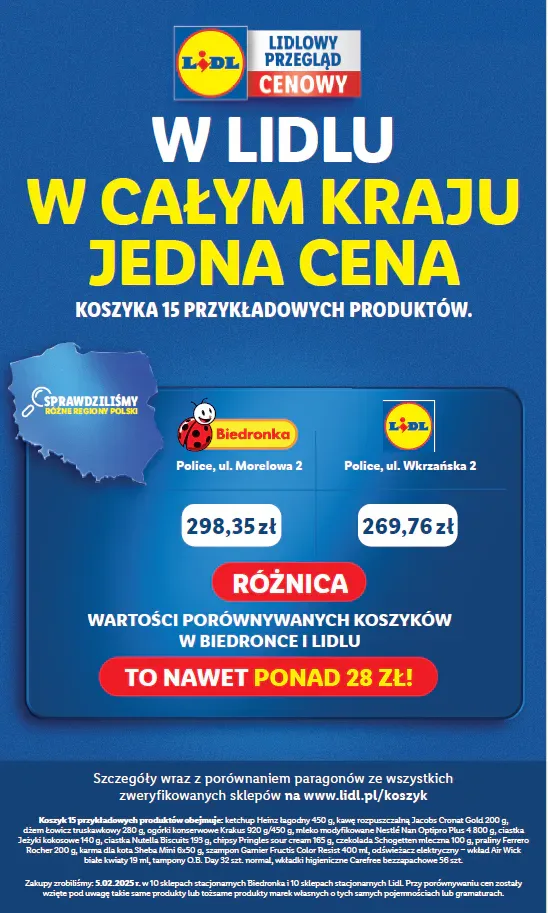
Just look at Poland’s two biggest supermarket chains to see how central price can become to communication. Lidl and Biedronka have spent years openly comparing their prices, sometimes naming each other directly in ads and turning individual product prices into the campaign itself. Their price war has repeatedly made national headlines too, showing how pricing communication can spill over into media relations.
Does price-sensitive mean Poles always choose the cheapest option?
No, Poles may love a good deal, but they’re hardly Europe’s biggest promotion hunters.
According to YouGov Shopper Intelligence, more than one-third of FMCG purchases in Poland in 2025 were made on promotion. That sounds like a lot. Yet Poland ranked only 10th out of 16 European markets analysed by YouGov. In the Czech Republic, for example, promotional purchases accounted for 56%.
Polish consumers also look at what they get for their money. And sometimes the cheapest product today isn’t the cheapest one to own.
How to use this in your marketing in Poland?
If your product can save customers money over time, calculate it for them. Don’t leave the value hidden behind a higher price tag.
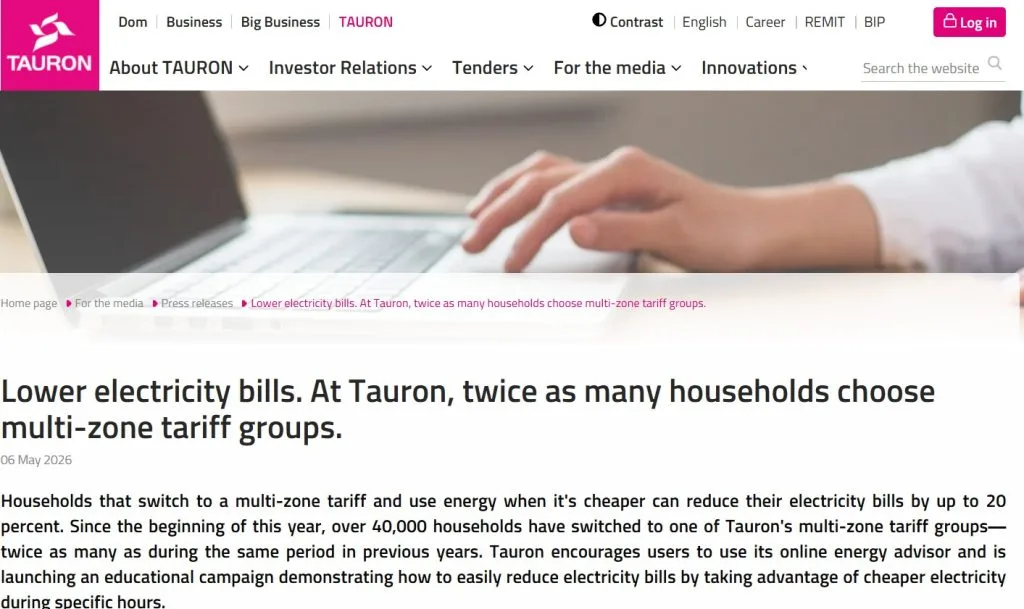
TAURON did exactly that in a 2026 Polish campaign promoting multi-zone electricity tariffs. Instead of simply promising lower bills, the company showed that households could save up to 20%, or around PLN 500 a year. It also gave customers an online tool to find the most cost-effective tariff for their own household:
Can premium brands or products succeed in Poland?
Absolutely. A price-sensitive market still has plenty of room for premium products. The difference is that a higher price gives consumers one more question to ask: what am I getting for it?
This is especially important when global brands bring premium products to Poland. Quality, technology or design can justify a higher price – but vague claims like premium quality won’t do much on their own. Give Poles something they can actually compare.
How to use this in your marketing in Poland?
Instead of discounting a premium product, consider adding more value to the offer. A better specification, extra service or valuable add-on can make the higher price easier to justify.
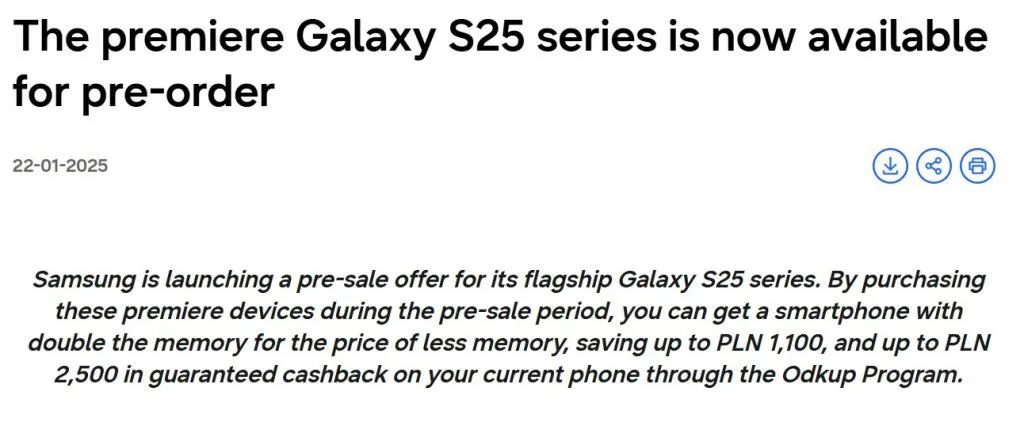
Samsung does this regularly with its Galaxy launches in Poland. When the Galaxy S25 series launched in 2025, buyers could get twice the storage for the price of the lower-capacity version, saving up to PLN 1,100, as well as up to PLN 2,500 back through its trade-in programme. The flagship stayed premium. The offer gave buyers more for the price:
Poles look at the price. They also look closely at what they get for it. If you’re bringing an international brand to Poland, our public relations team can help you find the right message for the local market. Talk to us about your next campaign in Poland. Book your strategy call!